This is one pedal that I owned for a time and parted with to acquire another bit of gear. Honestly I can't say enough good things about Digitech pedals, especially the cabinet simulators, which seem to be available in every model.
some of the cab sims are more complex than others, and each one has its own tonal characteristic. The Digitech Digiverb is no expection.
To engage the cabinet simulator, simply hold down the pedal before applying power. Otherwise it will just behave as if plugged into an amp and bypass the cabinet circuitry. Tone wise, the cab is a little dark, but that was not a big deal as it's easily tweaked in a mixing desk. Oh and it has a cabinet sim on both outputs!m Perfect for DI work.
Enough about the cab sims as this is a reverb pedal, and that's pretty much what everyone wants to know about. Well... the pedal isn't perfect. Especially if you're a spring tank purist, but it's passable in that mode. Gate and Reverse are pretty much the same as any other pedal with this feature. Where the pedal really shines is in the cavernous Church mode.
The decay is long and the spread is very large. Church mode is really great for making those huge pad-like ambient sounds. Hall and plate are nice too, but nothing like the Church mode. The Spring sim is almost correct, but the splash at the beginning of it doesn't feel right. Maybe I've spent too much time with a valve driven spring tank, which has a tendency to overdrive when I play hard?
Some people complained that the pedal was prone to introducing noise into a circuit if powered by a daisy chain. I did find this in some positions, but not in others. It's all dependent on where the reverb is placed in your signal chain and how your cables are arranged. I've had the same issue with other DSP based effects, it's not a deal breaker as it can be worked around, if you're not lazy.
I'd be buying this if I was in the market for an EHX Cathedral pedal, but couldn't afford the cash or the floor space. Agaion, RRP in Australia is pretty high, so try to get your hands on one via the 2nd hand market.
Visits
Thursday, January 19, 2012
Monday, January 16, 2012
2012 - Boss FRV-1 vs Fender Princeton
To do this, I mostly record guitar via headphones. I've used a few amp & effect simulators on the PC, which have been fine, but all seem to incur more of an performance hit than the CPU monitor would indicate.
Their modeling is reasonably good for most things, but for reverb it has not been anywhere near satisfying, not for spring anyway.
Since I use reverb as part of my tone quite frequently I've been hunting for that perfect silent solution. Even to the point of building a mechanical reverb circuit. Which worked FYI, but did not match the quality of a tube driven circuit.
I've owned the Marshall Reflector, Digitech Digiverb and Boss FDR-1. All of these were decent enough, but when it came to a convincing spring tone, the first two were no better than my computer. The third sounded quite good, but would introduce random reverb splashes even if there were no notes being played.
The Boss FRV-1 doesn't seem to have the same problem as it's predecessor. It runs quietly and as long as it's not being A/B'd with a real Fender amp, it's pretty convincing. The decay is nice and long and the tone control is very handy. It can be dark and muddy or so bright that your ears hurt.
When played in tandem with the Princeton Reverb, it's noticeably darker, and doesn't give quite the same quality of bright tone. In fact, running the pedal as a dry guitar, the top end of the guitar is somewhat attenuated, not quite tone suck, but more of an low pass filter. The advantage of this pedal would be running reverb on overly bright amps, or if you have to play in a venue with severe electromagnetic interference issues (such as my home) as there's no inductor coil to hum like a fridge when you want a big splashy verb.
In a mix it sits nicely and I'd be hard pressed to tell the difference between it and the real thing in a blind test, this might not be the case if I were the one playing the guitar as there is a marked difference between the two in terms of response to playing dynamics.
It's not a true substitute for the real thing, but it performs well for such a tiny package.
Sometimes a one trick pony is all you need.
Wednesday, January 11, 2012
Epiphone Les Paul - the final mod
Honestly I've no idea of the amount of hours I've put into it, but it's now very nice to play and sounds great!
Currently it's setup with 12-56 gauge round wound strings, has a Wilkinson Roller bridge, Bigsby B7 with Vibramate and a pair of matched humbuckers from a Gretsch 5120.
The original and replacement PAF style pickups never sounded much good to my ear, and the P-Rails did not really suit. The Gretsch pickups have turned out to make the guitar sound rich and gutsy. Excellent clean tones and can really drive a valve preamp.
I modded the Bigsby a little as the arm did not come far enough over the strings for my playing style. I filed the aluminium nub down a to get the end of the bar over the 3rd string. This way I don't have to reach across with my stubby fingers to play the way I want to.
Hopefully the new owner appreciates the work that was put into it.
Monday, December 26, 2011
Summer Projects
The weather has improved, so I've been outside again and working on three of my older guitars before progressing with restoration of the Hummingbird. Painting anything outside means that there's always the chance that dust and feathers can ruin your finish.
I've lost count of the amount of times I've sanded back parts to polish out the little mistakes. For the Ibanez Bass and the Lagrange Strat I've used cheap spray paint, which is a little tricky to work with as it dries slowly and is a little more fluid than the paint I've used on the Kay SG copy.
The Ibanez is being returned to it's factory colour (well.. shade...) and the Strat copy is painted in a nice surfesque "creation blue". The strat copy has had it's horns cut off, dents filled in and is part way through a conversion to a lap steel configuration.
The Kay SG copy was to be painted Surf Green, but the closest thing the local paint seller had was "Dark Calypso" which is a few shades darker than I wanted, but kind of cool in it's own right and looks nice coupled with cream headstock & pick guard.
The last couple of days have been raining and xmas lunch with the family interrupted work, but I'm hoping to have them all in playable condition by the time I return to the office in mid January.
Tuesday, December 6, 2011
2011 - Initial Pedal Reviews
I've got my hands on two pretty nifty pedals recently, I was a bit dubious of their claims, but it turns out they're quite pleasing to the ear.
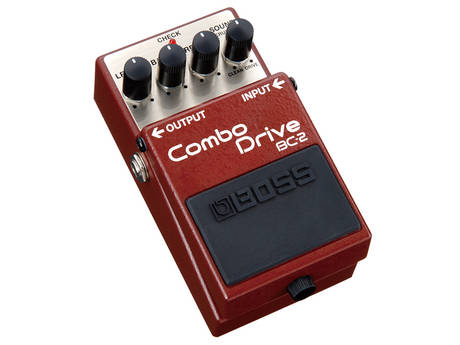
The pedals I'm talking about are the Tech 21 VT Bass and the Boss BC-2 Combo Drive. I have been after a decent bass sound for years, but only play occasionally and have no desire for an amp. I've played around with a couple of VST plugins that emulate some well known bass amps, but have never really been satisfied with anything aside from the clean tones.
I'd been looking at a bunch of solutions for going direct, including the Digitech Bass Squeeze, as it has speaker modeling. Unfortunately I couldn't find one in store anywhere, so I never got it.
I'd been impressed by the Sansamp products in the past, so I decided to find out what was available these days. This is how I came across the VT Bass. Demos of the clean sound were scarce, but the reviews were glowing. I figured that if I found one at a reasonable price, it would be mine. I have to say, I wasn't disappointed. As soon as I plugged it in, I was greeted by a thick warm sounding bass. I fiddled about with the settings card and got some nice tones, though all were dirty.
The sound that I was after was the sound of an Ampeg SVT fridge setup. Low and clean and huge.
Tech 21's pedal really delivers in this regard. I get what I want, without spending $4000 on an amp.
Sure it's not a magic box, but it gets me the tone that I want without much fuss or an eviction notice.
Since I have to do most of my guitar playing with headphones I have been messing around with direct solutions for years. The Digitech Bad Monkey is consistently the last item in the signal chain before the mixer.
I like the tone of the built in cabinet simulator. The only down side is that the bad monkey doesn't do clean, even on the lowest setting. I'd seen that the Boss BC-2 had just been released in Oz and was pretty cheap.
The demo video below sounded pretty good so I picked it up on a whim. Got it home and was able to mess with it for about an hour. Combined with the Bad Monkey it's quite dark sounding compared tot he sound in the video and as such it doesn't exactly sound like the Beatles, but it does a nice clean boost on one side and really heavy distortion on the other. The EQ is nice and makes up for the lack of bottom end in my Surfcaster.
My favourite setting was with the Treble on max, Bass at 75% and the "sound" at 25%. This allows for some grit when picking really hard or nice thick clean when playing gently. I even plugged it into my Fender Princeton and found that there was something missing when switched off.
I hope to get some demos recorded soon, but my computer is in need of a rebuild as it's spitting the dummy every time I try to get some sound on disc. Meanwhile, check out the videos from Youtube.
The pedals I'm talking about are the Tech 21 VT Bass and the Boss BC-2 Combo Drive. I have been after a decent bass sound for years, but only play occasionally and have no desire for an amp. I've played around with a couple of VST plugins that emulate some well known bass amps, but have never really been satisfied with anything aside from the clean tones.
I'd been impressed by the Sansamp products in the past, so I decided to find out what was available these days. This is how I came across the VT Bass. Demos of the clean sound were scarce, but the reviews were glowing. I figured that if I found one at a reasonable price, it would be mine. I have to say, I wasn't disappointed. As soon as I plugged it in, I was greeted by a thick warm sounding bass. I fiddled about with the settings card and got some nice tones, though all were dirty.
The sound that I was after was the sound of an Ampeg SVT fridge setup. Low and clean and huge.
Tech 21's pedal really delivers in this regard. I get what I want, without spending $4000 on an amp.
Sure it's not a magic box, but it gets me the tone that I want without much fuss or an eviction notice.
I like the tone of the built in cabinet simulator. The only down side is that the bad monkey doesn't do clean, even on the lowest setting. I'd seen that the Boss BC-2 had just been released in Oz and was pretty cheap.
The demo video below sounded pretty good so I picked it up on a whim. Got it home and was able to mess with it for about an hour. Combined with the Bad Monkey it's quite dark sounding compared tot he sound in the video and as such it doesn't exactly sound like the Beatles, but it does a nice clean boost on one side and really heavy distortion on the other. The EQ is nice and makes up for the lack of bottom end in my Surfcaster.
My favourite setting was with the Treble on max, Bass at 75% and the "sound" at 25%. This allows for some grit when picking really hard or nice thick clean when playing gently. I even plugged it into my Fender Princeton and found that there was something missing when switched off.
I hope to get some demos recorded soon, but my computer is in need of a rebuild as it's spitting the dummy every time I try to get some sound on disc. Meanwhile, check out the videos from Youtube.
Sunday, November 20, 2011
2011 Nashville Banjo
Around 2004 or 2005 I bought a Fender Banjo and played it a little bit in a band, mostly for the novelty factor, but I was the fifth wheel playing the extra bits like the occasional guitar line or synth bit. Honestly I wasn't very good at any of them.
The Banjo was cool and all, but the damn thing wouldn't stay in tune for more than a couple of minutes.
I had it for a couple of years, but never played much, simply because tuning it was such a pain that it didn't inspire practice. Also, since it had a resonator it was very loud and emphasised:
a: how crap I was
b: how out of tune it was.
Anyway, a couple of months ago I got the banjo bug again after digging up an old demo that I'd recorded with the banjo. Didn't think I'd be able to afford one, so I detuned a couple of my electrics and practiced banjo chords that way. Not great, but adequate. I was able to re learn that old song and started window shopping for banjos. A few six stringers popped up at the local 2nd hand shop, but they weren't very nice to play, so I passed on them and went on my merry way.
This meant that we now have low priced high quality instruments available to us. He happened to have a few budget models in stock and I proceeded to play. One of them had been on display in the window. It was a five string open back Nashville branded banjo. The store owner told me that it was made in the same factory as Oakridge, and that they were identical apart from the headstock shape and logo. The rest of the components are the same.
So I sold it (didn't see that coming did ya).
Anyway, a couple of months ago I got the banjo bug again after digging up an old demo that I'd recorded with the banjo. Didn't think I'd be able to afford one, so I detuned a couple of my electrics and practiced banjo chords that way. Not great, but adequate. I was able to re learn that old song and started window shopping for banjos. A few six stringers popped up at the local 2nd hand shop, but they weren't very nice to play, so I passed on them and went on my merry way.A couple of weeks later I had some time to kill while I waited for people to get organised and head out for the afternoon. I popped into the local acoustic instrument shop and had a chat to the owner about banjo's and my unhappy experience with the Fender.
In the six or so years since I owned it, he informed me that the world of banjo's had changed for the better.
This meant that we now have low priced high quality instruments available to us. He happened to have a few budget models in stock and I proceeded to play. One of them had been on display in the window. It was a five string open back Nashville branded banjo. The store owner told me that it was made in the same factory as Oakridge, and that they were identical apart from the headstock shape and logo. The rest of the components are the same.I played the Nashville and was suitably impressed. Impressed enough to go home and obsess about how to fund it. After going over my parts inventory, it was evident that I could finance the project and got the approval from a certain lady, to go ahead and purchase it.
The next day the banjo was mine!
It's all maple, with a brass tone ring which seems to really help sustain and gives that classic high frequency sound (I compared one without a tone ring too and there was a marked difference in high end). Being open backed it's not too loud and I've only had to tune it up twice in the last three weeks. I'm quite chuffed with this little banjo. I've been driving my family crazy with twang twang twang every chance I get.
![]() |
| My old Fender banjo |
Monday, November 14, 2011
DIY Scratch plates
The weather was kind to me, this past weekend. I managed to finally start making router templates.
Plywood and a Coping saw make for fairly easy work. I made three in two days.
Well not two full days, but over two days. Maybe 8 hours all up.
This is all as part of my summer projects, which I started late last summer. There are currently four guitars in various stages of reconstruction littering the house. It may appear as though I'm rather lazy when it comes to finishing projects (actually that's largely true), but last summer I did finish a number of large projects which got in the way of finishing these guitars. Also the parts I ordered from the U.S.A took their sweet time to arrive.
First up is a revisit of my first electric guitar The La Grange Strat Copy. Back in the day it had one horn cut off and the frets pulled. Some of the fretboard came up with the frets and the guitar was rendered unplayable.
I decided to try to rescue it, and the only sensible option seemed to be to turn it into a Lap Steel. I cut off the other horn and rounded it out a bit. The dark P90 shaped slab of wood is a piece of Jarrah which was probably the hardest thing to cut, ever. The Jarrah slab is actually going to be sitting on top of two piezoelectric elements that I pulled from a couple of cheap buzzers. The bridge will sit on top of the Jarrah biscuit, so that the pressure from the strings push down on the elements to create an acoustic like tone. For more traditional tones, I'll also add a humbucker pulled from my buddies' Gretsch. In addition to the body mod, I'm considering reshaping the headstock to more of a square sort of shape. We'll see....
This is an oldie. Bought way back in the 90's for $60. I think it's a Kay, but there are many guitars from the 60's that look like it. When I bought it, the guitar was in terrible condition. Almost unplayable. It ended up sitting in a cupboard at my mother's house for more than a decade. I retrieved it around 18 months ago and slowly began working on it. The original scratch plate was split into two segments. Not elegant in my opinion, but hey, that's the way it was. I've never really been much of a fan of the traditional SG plates and thought that I'd have a crack at making my own design. It's borrowed some aesthetics of Airline guitars with a hint of Mosrite thrown in by chance (dictated by the routing actually).
The real hard part is cutting these into pickguard material, which is a nightmare to work as the plastic curls and catches on the blade and gums up the router attachments.
Plywood and a Coping saw make for fairly easy work. I made three in two days.
Well not two full days, but over two days. Maybe 8 hours all up.
This is all as part of my summer projects, which I started late last summer. There are currently four guitars in various stages of reconstruction littering the house. It may appear as though I'm rather lazy when it comes to finishing projects (actually that's largely true), but last summer I did finish a number of large projects which got in the way of finishing these guitars. Also the parts I ordered from the U.S.A took their sweet time to arrive.
First up is a revisit of my first electric guitar The La Grange Strat Copy. Back in the day it had one horn cut off and the frets pulled. Some of the fretboard came up with the frets and the guitar was rendered unplayable.
I decided to try to rescue it, and the only sensible option seemed to be to turn it into a Lap Steel. I cut off the other horn and rounded it out a bit. The dark P90 shaped slab of wood is a piece of Jarrah which was probably the hardest thing to cut, ever. The Jarrah slab is actually going to be sitting on top of two piezoelectric elements that I pulled from a couple of cheap buzzers. The bridge will sit on top of the Jarrah biscuit, so that the pressure from the strings push down on the elements to create an acoustic like tone. For more traditional tones, I'll also add a humbucker pulled from my buddies' Gretsch. In addition to the body mod, I'm considering reshaping the headstock to more of a square sort of shape. We'll see....
Next up is the new template for my Tokai Hummingbird. The plate that came with the guitar was too pointy, too skinny and not nearly Mosrite enough. I thought about this for most of the last year. As the guitar has quite large routing holes, it was a case fill in some or work out how to cover them. It seemed simpler just to cover them up. The plate I have in mind is tortoise shell, but am considering a half an half of cream and tortoise shell, to give the illusion of half a pick guard. Time will tell if I am off my rocker.
This is an oldie. Bought way back in the 90's for $60. I think it's a Kay, but there are many guitars from the 60's that look like it. When I bought it, the guitar was in terrible condition. Almost unplayable. It ended up sitting in a cupboard at my mother's house for more than a decade. I retrieved it around 18 months ago and slowly began working on it. The original scratch plate was split into two segments. Not elegant in my opinion, but hey, that's the way it was. I've never really been much of a fan of the traditional SG plates and thought that I'd have a crack at making my own design. It's borrowed some aesthetics of Airline guitars with a hint of Mosrite thrown in by chance (dictated by the routing actually).
The real hard part is cutting these into pickguard material, which is a nightmare to work as the plastic curls and catches on the blade and gums up the router attachments.
Subscribe to:
Posts (Atom)